
Behind the Vest:
Digging into the Work of Crisis Response Canines
Empowering First Responders Through Canine-Assisted Interventions
Purpose Beyond Oneself™: Empowering
First Responders Through
Canine-Assisted Interventions
By: Joseph Simpson, EMT, EMD, Firefighter, CRC Emergency Services Liaison, CRC K9-Handler
With contributions from: CRC President Andrea Hering, CRC Vice President John Hunt, CRC Board Chair Mary Law, and CRC
Gloucester County Contact Wendy Collins

First responders serve in some of the most demanding
environments imaginable. Trauma, unpredictability, and
extraordinary responsibility intersect every single day. The work is meaningful and lifesaving, but it is also relentless. Over time,
the weight of what we witness can affect our mental wellbeing,
our resilience, and even our connection to the reasons we
entered this profession in the first place.
Purpose Beyond Oneself™ is more than a slogan. It is a mindset that strengthens professional commitment, encourages healthier
ways of processing stress and trauma, and supports long-term resilience. It is a reminder that service is not just a technical skill set. It is deeply human. Now more than ever, first responders need support systems that honor both the mission and the people who carry it out.
This is where canine-assisted interventions, peer partnerships, and inter-agency collaboration can make a meaningful difference in how we approach recovery and resilience in emergency services.
Reconnecting With the “Why” Behind the Work
Most of us stepped into this field driven by something larger than ourselves. A desire to serve, a personal experience, compassion for others, or simply the belief that we could make a difference. But as the years pass, long shifts, difficult calls, and repeated exposure to trauma.
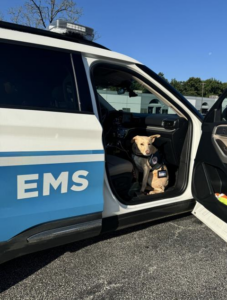
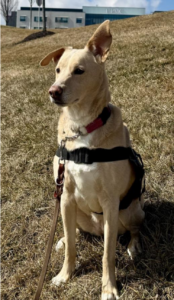
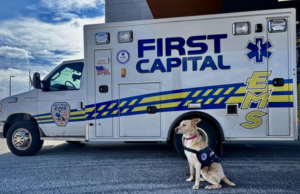
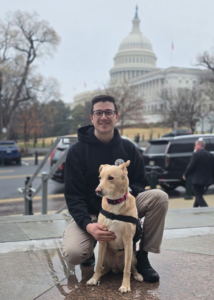
I began my EMS career in 2015 as a volunteer. What started as a passion grew into a full-time career that took me from street staff to leadership roles and eventually into owning my own ambulance company. But my connection to Crisis Response Canines began in 2021, after our agency experienced the sudden loss of two dispatchers. CRC responded with comfort visits, and the shift in staff morale was immediate. Those visits created a level of connection and grounding that no policy or meeting ever could have. That experience stayed with me. In 2023, I became a CRC handler and certified with my partner, Noodle. Joining the organization that once supported me gave me the opportunity to give back to others standing where I once stood. That sense of purpose still drives me today. Every first responder has their own reason for choosing this profession. Reconnecting with that “why” is one of the strongest protective factors we have.
The Realities First Responders Face
While the public understands that our work is difficult, most will never fully grasp what we see and carry. Emergency services operate twenty-four hours a day. Our environments change from minute to minute. We respond to violence, trauma, death, and destruction, often repeatedly and often without time to process what we have just experienced. The average American may encounter fewer than a dozen deceased individuals in their lifetime. Most first responders reach that number early in their careers, and some encounter that many in a single month. The cumulative effect of this exposure takes a toll. Research consistently shows elevated risks among first responders. First responders have a 73% greater mortality risk, 30% develop behavioral health conditions, 56% of first responders are in environments without support and contemplate suicide, 30% report that they have an alcohol problem, and 20% of first responders turn to abusing prescription drugs or other drug use, and that’s just the number of those who were honest. Trauma does not just affect mental and emotional health. It impacts the nervous system as well. Hypervigilance, emotional numbness, irritability, difficulty relaxing, and problems regulating stress are not personality flaws. They are natural physiological responses to repeated exposure to trauma.
Despite this, our culture has long emphasized toughness and emotional control. Many responders fall into the familiar mindset of “This is normal.”, “I was trained for this.”, “I’m fine.”, and “Death doesn’t affect me.” But eventually, the day comes when we are not fine. When that happens, we need space to acknowledge it without shame. Ending the stigma surrounding mental health in emergency services is not optional. It is necessary.
PTSI vs. PTSD: Why Language Matters
Many professionals in the trauma field have started using the term Post-Traumatic Stress Injury (PTSI) instead of Post-Traumatic Stress Disorder. This shift is important because an injury is viewed as something treatable, temporary, and expected but a disorder is often viewed as chronic or permanent.
One invites healing. The other invites stigma.
PTSI emphasizes early intervention, peer support, and post-traumatic growth. It encourages responders to view trauma as a wound rather than a personal flaw, which is a much healthier and a more accurate framework.
The Role of Canine Assisted Interventions
Both research and real-world experience show that canines can play a crucial role in stabilizing individuals and groups following traumatic events. Within the Critical Incident Stress Management model, canines are considered an operational tool that helps create psychological safety, reduces emotional intensity, and allows individuals to re-engage after a crisis.How Canines Support Recovery
Grounding:
Trauma can push people toward overwhelm, hypervigilance, or complete emotional shutdown. A canine provides a steady, familiar point of safety.
Physiological Regulation:
Simply touching or interacting with a dog can lower your heart rate, decrease cortisol, and increase oxytocin. These shifts help the body move into a calmer, more regulated state.
Access to Communication:
Some individuals who are hesitant to speak with a peer or mental health professional will willingly talk to a dog. That interaction often becomes the bridge that allows further support to take place.
Environmental Stabilization:
During defusing’s or post-incident sessions, the presence of a canine naturally softens the atmosphere. Shoulders relax. Breathing slows. People open up more easily.
Companionship on Long or Stressful Deployments:
In extended operations or prolonged crisis situations, a canine can reduce isolation and emotional fatigue
Non-Judgment:
Dogs do not question, analyze, or evaluate. They simply offer comfort. For someone experiencing traumatic stress, that can be incredibly powerful.
I have seen these effects personally. I have placed Noodle in front of some of the toughest first responders, people who appear unshakeable and insist they are “fine.” Within minutes, I have watched walls come down. I have seen emotional release from events that happened twenty years ago, long locked behind the survival instinct of “just keep going.” These moments are not exceptions. They are common.
Training Behind the Mission
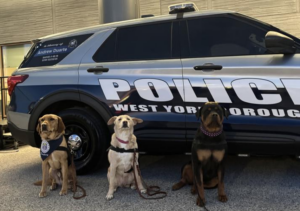
Crisis Response Canines is a 501(c)(3) nonprofit organization composed entirely of volunteers. Every team commits to extensive training and high standards.
Our canine partners receive:
• National therapy dog certification
• AKC Canine Good Citizen (advanced and urban)
• Crisis Response Canine certification
• Temperament and behavior testing
• Exposure to law enforcement defensive systems
• Service dog level task training such as tactile distraction, grounding, positive pressure therapy, and creating space.

Handlers are trained in:
• Traumatic stress and trauma response
• Suicide prevention
• CISM and crisis intervention
• Substance use and co-occurring disorders
• Animal-assisted intervention
• Mental Health First Aid
• Psychological First Aid
• HIPAA and confidentiality
• NIMS incident structure
• Human and canine first aid and CPR
• Canine body language and “reading the lead”
This level of preparation ensures that CRC teams operate with professionalism, confidence, and compassion.
Purpose, Partnership, and the Path Forward
The work of emergency services will never be easy. But with the right support systems, it can become more sustainable. Purpose Beyond Oneself™ encourages responders to stay connected to the reasons they chose this path. Canine teams, peer programs, and collaborative partnerships provide tangible ways to reduce the long-term impact of traumatic stress.
At the core of this mission is a simple belief:
When we care for the people who respond, we strengthen the resilience of entire communities.
I am grateful for organizations like ICISF, the partner agencies who support this work, and the leadership of Crisis Response Canines for recognizing how vital responder wellbeing truly is. Together, we are moving toward a future where mental health is not an afterthought but a critical piece of operational readiness.
To every first responder, whether you are on the street, behind the radio, or supporting from another part of the system:
Your purpose still matters. Your “why” is still within you. And you deserve the same care, compassion,
and support that you give to others every day.
Not All “Crisis” Canine Organizations Are the Same: What Makes CRC’s Dogs True Assets, Not Just Visitors
Over the past few years, a lot of organizations have started using words like crisis, first responder, or critical response in their names. It sounds reassuring at first glance. After all, who wouldn’t want to believe that any dog with that title is trained to walk into a difficult situation and genuinely help?
But here’s the truth that doesn’t get talked about enough:
using the word “crisis” doesn’t automatically mean the dogs—or the handlers—have the training to work in real crisis environments.
Many programs do wonderful work in hospitals, schools, or community settings. They bring comfort, connection, and moments of peace. But working inside an actual crisis—supporting a shaken school after a tragedy, standing beside first responders after a traumatic incident, or being present in a room filled with raw grief—is a completely different world.
And this is where Crisis Response Canines (CRC) rises far above the label.
CRC Dogs Are Not Therapy Dogs.
They Are Trained Partners in Crisis Care.
People often assume CRC dogs are simply therapy dogs with a fancier name.
They’re not.
CRC dogs are trained to stay steady in environments filled with emotion, unpredictability, and sometimes chaos.
They learn to work around sirens, radios, crowds, and people in distress. They practice entering unfamiliar places—schools, firehouses, briefing rooms, emergency operations centers—without missing a beat.
CRC teams train over and over again in real-world scenarios because crisis work demands it.
Where a therapy dog’s purpose is comfort, CRC canines have a broader, deeper role:
grounding someone who is overwhelmed
offering a point of stability in chaotic settings
supporting peer-support teams and mental-health providers
reinforcing resilience among first responders
helping communities find their footing again after tragedy
These dogs don’t just “show up.”
They belong in the room.
Being Around First Responders Doesn’t Make a Dog a
Crisis-Response Dog
This is another common misconception.
Some programs describe themselves as “first responder canine units” simply because they visit police or fire departments. That doesn’t automatically mean the dogs can operate safely during or after an actual critical incident.
CRC dogs are evaluated and certified to a level that requires them to stay composed even when:
emotions are running high
the environment is unpredictable
people are in shock or distress
responders’ needs shift moment to moment
They are trained, tested, and re-tested.
Handlers learn to read the room, understand trauma reactions, and maintain ethical boundaries. This level of preparation protects everyone—the dog, the handler, and the people they serve.
Partnerships That Go Far Beyond Drop-In Visits
One of the biggest differences between CRC and general therapy-dog groups is how deeply CRC integrates with the agencies it supports.
CRC teams don’t just pop in for a photo or a one-time morale boost.
They work alongside police, fire, EMS, schools, emergency management, and behavioral-health partners. The relationships are ongoing and built on mutual trust.
That professionalism is why these agencies pick up the phone and specifically request CRC when something goes wrong.
They know who they’re bringing into their space—and they know CRC teams will do the job with the same seriousness and care as any other responder.
The Community Resource K9 (CRK9) Program:
A Resource Built for Long-Term Impact
One of the most innovative pieces of CRC’s work is the Community Resource K9 Program.
Instead of relying solely on outside teams, CRC helps agencies build their own internal canine resource—trained, guided, and supported by CRC’s standards.
These dogs become part of the agency’s daily life and culture. They work in:
community outreach
youth engagement
responder wellness
peer-support programming
crisis stabilization after difficult calls
This isn’t a “feel-good mascot” program.
It’s a long-term resilience tool.
The CRK9 dogs are selected and trained for the specific environments they will serve in, which makes them far more than emotional-support animals. They are part of the agency’s wellness and crisis-care strategy.
Why These Distinctions Matter
In moments when lives are shaken and emotions run high, it’s not enough for a dog to simply be sweet or well-behaved.
Crisis response is delicate work. It requires training, intuition, calmness, and a handler who understands trauma, boundaries, and safety.
When a community or agency asks for help, they deserve teams that are prepared—not just in name, but in practice.
CRC’s standards are high because the stakes are high.
That’s what sets Crisis Response Canines apart.
Not the name.
Not the branding.
Not the uniforms.
The difference is in the training, the professionalism, the partnerships, and the ability to show up when it truly matters—with the skill and steadiness the moment requires.
Cortisol and Crisis Response Canines: Why Imprinting on Stress Hormones Isn't a Silver Bullet
Cortisol and Crisis Response Canines: Why Imprinting on Stress Hormones Isn’t a Silver Bullet
At Crisis Response Canines, we continually reevaluate our methods and training techniques to support our canine teams to the best of our ability, while providing calmness, connection, and hope to those in the midst of trauma. When discussing this with both professionals in the field as well as the general public, one of the questions we are frequently asked is why we do not imprint our dogs on cortisol, the hormone humans produce when they are under stress.
On paper, it sounds like a seamless fit. Suppose we can imprint our dogs to target cortisol specifically and rely on their naturally high-drive behavior to hone in on people when they are in distress. In that case, we have a system in place that enables the dogs to easily “sniff out” stress and give those most in need of comfort some reprieve. But as well-intentioned as it sounds in practice, it’s not so simple and, in fact, imprinting a dog on cortisol as a working tool has some very specific limitations that we as professionals must understand and take seriously.
The Science Behind the Idea
Cortisol is a glucocorticoid hormone that humans and other mammals release when dealing with physical or emotional stress. Research has established dogs can smell human emotional states, including stress, in part due to the changes in the sweat and emissions of stress-related hormones like cortisol. For instance, in a 2020 study, published in the journal Animal Cognition, dogs were able to distinguish between baseline human and stress-induced sweat samples with a high degree of accuracy (D’Aniello et al., 2020). In the study, “The main scent cue turned out to be cortisol, as previously described in saliva (Poh et al., 2018), from where we may speculate it is transported into sweat.”
This helps to establish the basis for “scent imprinting”, which is a training technique often used with detection dogs for explosives, narcotics, and now even indicators for disease and human physiological states. When used with cortisol, the idea of being able to turn our dogs into a “search and rescue” for stress and anxiety has some legs to it.
But Why Doesn’t It Work?
While the research seems promising in the laboratory setting, the outside world is a different story. Let’s look at a few of the most common reasons as to why this simply is not practical in the real world.
1. Stress is Omnipresent
When you get to a scene, whether it’s a school in the midst of a tragedy, a firehouse dealing with the stress of a fatal call, or even a community function following a disaster, the cortisol signature you are looking for is not coming from one person. In the scene we are likely already seeing an elevation in stress hormones in every human, canine, and rescue animal at the scene. “It’s very different from when a dog is training on an explosive odor, which is going to be specific to that spot, or an odor panel, or a highly isolated room. With stress, when everyone is elevated, there’s no target to sniff out. It’s everywhere, and it’s nowhere.”
The research cited above that showed dogs could distinguish between baseline and stress sweat showed a detection rate of about 70-80%. When you consider that a working scene the dog is exposed to people at all ranges (close, far, direct, indirect) with fluctuating and variable cortisol levels this becomes a smell the dogs are going to be overwhelmed by.
2. Dogs Are Already Empaths, Not Scanners
Crisis Response Canines, in general, have already demonstrated that they use a more highly intuitive, sensory-based way of assessing their environments and the people in it to help us connect with those in need. The dogs we work with generally find those who are in the most distress naturally—not because they have been imprinted on a certain hormone but because of an overall assessment of body language, tone of voice, posture, and general emotional energy.
If we as professionals are going to try to add on a strictly scent-based stimulus over something that is so multilayered and sensory, we are actually deconstructing what makes these dogs so helpful in the first place.
3. False Positives and Misdirection
For every person with heightened cortisol levels due to a trauma or other stressor, there are several more reasons why someone’s cortisol might be up. From a working perspective, this can lead to the dogs inadvertently alerting to someone who is simply nervous, tired, worked up, or wound up for no reason.
These alerts, rather than focusing the handler on the people who need the most assistance, can actually redirect our work away from those we are trying to support. If a dog alerted on someone who is not in distress or even recognized by the handler or team, we also run the risk of losing time retraining or resetting the dog.
Ethical Considerations for Our Dogs
In addition to the above limitations for the welfare of the people we serve, from the dogs’ side of the equation, we must ask ourselves: what are we asking them to do emotionally?
When we imprint a dog on cortisol, we are also setting up the animal to an expectation that they “need to” or “should” respond every time they get a scent trigger.When you are in a crisis response or emergency environment where the cortisol signature is coming from almost every human (and some rescue animals) that is emotionally triggered, it quickly can lead to: Sensory overload, Decision fatigue, Compassion stress or even compassion fatigue in the animal (did you know dogs can get it too?)
The team at Crisis Response Canines works very hard to keep our dogs safe from anything that could cause emotional harm, just as we work hard to protect the people we work with.
Connection Over Detection
We, as handlers and as organizations, must continue to be forward-thinking and open to innovation. But the primary obligation we have to our people is not about what is trendy or scientifically popular at the moment but what actually works in the field. Our dogs do not need to “sniff out” a hormone to understand that someone in front of them is hurting. We have an opportunity to leverage their innate ability to connect on a highly emotional level which, when coupled with training, assessment, and exceptional handler awareness and teamwork will allow the dogs to continue to provide safe, effective, and deeply human interventions when we need it most. A Crisis Response Canine’s greatest tool is not something they smell, it’s something they sense.
References
• D’Aniello, B., Semin, G. R., Alterisio, A., Aria, M., & Scandurra, A. (2020). Interspecies transmission of emotional information via chemosignals: From humans to dogs (Canis lupus familiaris). Animal Cognition , 23 (2), 167–179. https://doi.org/10.1007/s10071-019-01374-9
• Beetz, A., Uvnäs-Moberg, K., Julius, H., & Kotrschal, K. (2012). Psychosocial and psychophysiological effects of human-animal interactions: The possible role of oxytocin. Frontiers in Psychology , 3, 234. https://doi.org/10.3389/fpsyg.2012.00234
Canine Temperament vs. Canine Personality: Their Impact on Animal-Assisted Interventions
When it comes to working with dogs—especially in the realm of animal-assisted interventions—understanding the distinction between canine temperament and canine personality is essential. While these terms may seem interchangeable to some, they represent distinct aspects of a dog’s behavior and character, particularly in high-pressure situations such as crisis response.
Defining Canine Temperament
Canine temperament refers to the innate traits and instincts that influence a dog’s typical reaction to various stimuli and situations. It encompasses a dog’s inherent emotional responses, such as their level of aggression, fearfulness, or sociability. Temperament is often assessed through standardized evaluations and can provide insight into how a dog may perform in specific tasks or environments.
For example, dogs with a calm and stable temperament are generally more suited for therapy work, where they are expected to be gentle and reassuring in stressful situations. A stable temperament allows them to remain composed and provide comfort to individuals in need.
Understanding Canine Personality
On the other hand, canine personality is more fluid and refers to the unique traits and quirks of an individual dog. These characteristics can be influenced by a dog’s life experiences, training, and socialization. Personality encompasses behaviors such as playfulness, curiosity, and even ‘stubbornness’.
In the context of animal-assisted interventions, a dog’s personality can significantly influence its engagement with people. A dog with a warm and friendly personality may be more effective in comforting a child who is distressed, while a more reserved dog might connect better with a client who prefers a quieter interaction.
The Intersection of Temperament and Personality in Animal-Assisted Interventions
When selecting a dog for animal-assisted interventions, both temperament and personality should be considered. Dogs that are naturally temperamentally stable but also have a warm personality can form strong bonds with the individuals they assist. Here are some key considerations:
1. Selection of Working Dogs: Organizations that train therapy or assistance dogs often screen for specific temperamental traits, like resilience to stress and strong social drives. However, they also look for dogs with personalities that complement the roles they will take on, ensuring they can adapt to varied environments and client needs.
2. Training and Adaptability: A dog’s personality may dictate how easily they adapt to training. For example, a highly intelligent and curious dog may thrive in dynamic environments, while a more laid-back dog might prefer routine and structure. Trainers often tailor their approaches based on an understanding of both temperament and personality traits.
3. Client Needs: Different clients may respond better to different types of dogs. Some individuals may seek out the serene presence of a calm dog, while others might appreciate the energetic and playful nature of a more spirited canine companion. Knowing these differences can enhance the effectiveness of interventions.
In the world of animal-assisted interventions, distinguishing between canine temperament and personality is crucial for ensuring a successful partnership between dogs and the individuals they assist. By understanding these concepts, handlers and trainers can make informed decisions that prioritize the well-being of both the dogs and the people they serve. Ultimately, the right combination of temperament and personality can foster incredible connections, providing comfort and healing during challenging times.
As we continue to explore the invaluable roles that dogs play in our lives, it’s essential to recognize and appreciate the unique attributes each dog brings to their work in animal-assisted interventions. Whether it’s through their temperament or personality, these remarkable animals have an unparalleled ability to make a difference in the world.
Transforming Crisis Response: The Essential Role of Canine Support
In recent years, the importance of Crisis Response Dogs, Facility Dogs, and First Responder K9s has gained recognition across various sectors. These remarkable animals have proven to be invaluable in high-stress environments such as hospitals, disaster zones, and emergency response teams. However, it’s essential to understand that not all programs and placements are equal.
The Importance of Quality Training
A well-trained dog is vital in crisis situations, where their responsibilities can be significant. It’s crucial that each dog undergoes rigorous evaluations to ensure they have the right temperament, skills, and behavior needed for their roles.
Additionally, handler training is equally critical. Those who work with these dogs must be well-prepared to communicate effectively with their canine partners and manage the complexities of diverse situations. Handlers need to understand how to support their dogs while prioritizing the safety and well-being of everyone involved.
Risks of Insufficient Training
The trend of assigning labels to dogs without adequate training and evaluation poses a serious risk. When agencies neglect essential preparation and ongoing requalification, they endanger both the effectiveness of these animals and the safety of the community. During times of crisis, a properly trained canine can significantly impact not only by offering decompression and recovery support.
Setting High Standards in Training
Agencies must commit to high standards of training and ongoing evaluation. By doing so, they build trust in the services provided by these extraordinary dogs and their handlers, enhancing their impact in times of need.
One organization leading the charge in canine crisis response is Crisis Response Canines. With over 30 years of experience, they exemplify professionalism and excellence in dog training and behavior evaluations. Their deep understanding of canine psychology ensures that each dog is well-equipped to meet the unique demands of crisis situations.
National Certification and Expert Collaboration
Crisis Response Canines takes pride in the national certification of their trainers, reflecting rigorous standards in effective training methodologies. Each trainer has passed challenging written examinations that assess their knowledge in canine behavior, training techniques, and crisis management strategies. This level of certification reassures clients and partners of their trainers’ expertise and practical skills.
The organization collaborates closely with first responders—firefighters, police officers, and emergency medical personnel—to develop specialized training programs that prepare dogs for the emotional and logistical challenges presented in critical incidents, ensuring they can effectively support those dealing with trauma.
A Holistic Approach to Stress Management
Their expertise in critical incident stress management integrates advanced behavioral strategies, helping both canines and individuals cope with high-stress events. This holistic approach emphasizes not only dog training but also the emotional support canines provide, reinforcing their role in the mental well-being of those affected by crises.
Conclusion: A Commitment to Excellence
In summary, Crisis Response Canines stands as a leader in the canine crisis response field. Their combination of extensive experience, rigorous training, and dedication to supporting first responders and communities underscores their commitment to making a meaningful impact in times of crisis. By prioritizing quality training and collaboration, we can ensure that these incredible dogs continue to provide essential support when it’s needed most.
Animal Consent in Animal-Assisted Interventions
Animal-assisted interventions (AAI) involve the incorporation of trained animals, often canines, into therapeutic practices to promote emotional, physical, and psychological healing in humans. These interventions can occur in various settings, such as hospitals,
schools, and nursing homes, following tragic events where the presence of a canine can provide comfort, reduce stress, and encourage social interactions.
One important aspect of AAI is the idea of animal consent. While we may view consent as a human-centric concept, it’s crucial to understand that animals also have their own boundaries, preferences, and physical limitations. Understanding and respecting these
needs is vital for the welfare of our canine partners. Here are some ways we can improve our approach to animal consent in AAI:
1. Behavioral Observations: Trainers and handlers should be well-versed in canine body language and behavior. This knowledge will help them identify signs of stress, discomfort, or disinterest in their animal partners. If a canine is showing signs of reluctance, such as
turning away, panting, or displaying an anxious demeanor, it’s crucial to reassess their involvement.
2. Choice in Participation: Allow canines the option to opt in or out of specific activities. This can be as simple as using a leash or gate to create a safe space where they can choose to come forward or remain withdrawn. Empowering canines to make those choices
respects their autonomy.
3. Positive Reinforcement Training: Training that prioritizes positive reinforcement helps ensure that the canine partner is comfortable and happy during interactions. Techniques should be based on rewarding desired behaviors rather than correcting unwanted ones, which fosters a positive experience for the animal.
4. Frequent Breaks: Working in AAI can be demanding for canines. Regular breaks should be scheduled to allow them to rest and decompress. This practice helps maintain their physical and mental well-being and promotes a more positive interaction with the
individuals they assist.
5. Informed Handler Training: Handlers should undergo comprehensive training that covers not just working with humans but also understanding canine behavior and anatomy. Educating handlers about the welfare and instincts of their canine partners enables them
to advocate effectively for their needs.
6. Monitoring Health and Well-being: Regular veterinary check-ups and mental health
assessments are essential to ensure the animals are fit for AAI work. Any signs of illness or stress should be addressed swiftly to avoid putting them under unnecessary pressure.
7. Creating an Inclusive Environment: Teams should promote an environment where the well-being of the animal is a priority. Involving animal welfare specialists in the design of AAI programs ensures that ethical considerations are at the forefront of interventions.
By focusing on these areas, we can better respect and care for our canine partners in animal-assisted interventions, ensuring that their needs are met alongside those of the humans they assist. Building a partnership based on mutual respect and understanding can enhance the effectiveness of these interventions. It is crucial to listen to your canine and recognize when it is time for them to retire. Simply saying to people, “You can pet my canine,” does not mean your canine is consenting to participate. It is vital that we respect our canine partners.